A journey to search my soul

This is a blog of my personal collections. The purpose of this blog is to educate myself and public in regards to antiquities especially related to religion and calligraphy. I welcome everyone to input their feedback in this blog which they think would be helpful. I do not watermark the photos in this blog so everyone is free to use them as long as they are not used for illegal and unethical reasons. I appreciate if you could notify me if you plan to use any of the photos here. Enjoy browsing!!
Showing posts with label Ancient coins. Show all posts

Sunday, September 20, 2026

Antique Coin Review 123 : The dated Arab-sassanian Islamic coin from Caliph of Mecca, Abdullah Al Zubayr, 57 reign year of Yazdegerd III / 67-68 AH ( 687-688 CE )


This a dated Arab-Sassanian coins assigned to Anti-Umayyad Caliph of Mecca, Abdullah b. Al Zubayr. This coin was struck during the era of Caliph Abdul Malik on Yazdgird III silver drachm. The date on this coin shows regnal year 56. All legends on both sides of this coin were inscribed in Pahlawi except the Arabic verse on the lower right margin on the obverse, بسم الله

Thing to note on this coin, the Muslim kept the Sasanian ruler name and title with the exception of adding the word Bismillah on the margin. The usage of sasanian dirhams continued till the reign of Ummayad. However during the rule of Muawiya. the Sasanian ruler names were removed and replaced with the name of Governors in Pahlawi script.

Yazdegerd III, (died 651, Merv, Sāsānian Empire) the last king of the Sāsānian dynasty (reigned 632–651), the son of Shahryār and a grandson of Khosrow II. During Caliph Umar reign, he invited Yazdgird III into Islam however he refused. When Sasanian Empire fell, Yazdgird III fled to the east and was murdered by a robber in 651CE.

Because the Darabjird mint in southern Persia retained the solar Yazdegerd era calendar (calculated from the accession of Yazdegerd III in 632 CE), YE 56 corresponds directly to AH 67–68 / 687–688 CE. This was during the Second Islamic Civil War (Second Fitna), when 'Abd Allah ibn al-Zubayr claimed the caliphate in Mecca and minted silver drachms across Fars and Kerman. He was notably the first rival ruler to style himself as Amīr al-Mu'minīn ("Commander of the Faithful") on coinage.

‘Abd Allah ibn al-Zubayr (624–692 CE / 1–73 AH) was a companion of the Prophet Muhammad and a central political and military figure in early Islamic history. He was the first Muslim child born to the Emigrants (Muhajirun) in Medina after the Hijrah, which gave him immense prestige among early Muslims.

Why He Is a Prominent Figure in Islamic History

  • Leader of the Counter-Caliphate: During the Second Islamic Civil War (Second Fitna), he refused to swear allegiance to Yazid I and later proclaimed himself Caliph in Mecca in 683 CE (64 AH).

  • Control of the Empire: His caliphate was recognized across major regions of the Islamic world, including the Hijaz (Mecca and Medina), Iraq, Egypt, and parts of Syria and Persia, making him the chief rival to the Umayyad dynasty for nearly a decade.

  • Administrative & Numismatic Innovations: He was the first rival ruler to style himself as Amīr al-Mu'minīn ("Commander of the Faithful") on silver coinage, integrating Islamic religious legends alongside traditional Persian motifs.

  • Reconstruction of the Kaaba: In 684 CE, following damage sustained during an Umayyad siege, he rebuilt the Kaaba upon what he believed to be its original Abrahamic foundations, including the Hatim area within its structure (later restored to its original shape by the Umayyads).

  • Symbol of Early Political Opposition: His martyrdom in 692 CE during the siege of Mecca by al-Hajjaj ibn Yusuf marked the defeat of early Sahabah-led resistance to Umayyad dynastic rule and consolidated Umayyad control across the empire.

‘Abd Allah ibn al-Zubayr was not only considered the Caliph based in Mecca, but he was at the absolute peak of his power and territorial influence across the Islamic world.

His Status in 687–688 CE (YE 56)

  1. Based in Mecca as the Caliph:

    Mecca served as Ibn al-Zubayr’s capital and sanctuary (haram). He governed from the holy city, where he had taken the oath of allegiance (bay'ah) as Caliph in late 683 CE (64 AH) following the death of Yazid I.

  2. Peak Territorial Control:

    By 687–688 CE, his authority was recognized far beyond Mecca and the Hijaz. His counter-caliphate controlled:

    • The Hijaz (Mecca and Medina)

    • Iraq (Kufa and Basra)

    • Egypt

    • Persia / Fars & Kerman (where this coin was minted at Darabjird)

    • Parts of Syria and Yemen

  3. Control over Persia and the Minting of this Coin:

    In 687 CE (AH 67), Ibn al-Zubayr's brother and governor in Iraq, Mus'ab ibn al-Zubayr, successfully defeated the rebellion of al-Mukhtar in Kufa, consolidating Zubayrid control over Iraq and the eastern provinces of Persia. The Darabjird mint in Fars was under Zubayrid administration at this exact time, issuing silver drachms bearing Ibn al-Zubayr’s title as amīr-i -wurrishnikān (Pahlavi for "Commander of the Faithful") to assert his caliphal authority over the realm.

  4. The Umayyad Context:

    During this exact year, the Umayyad caliph 'Abd al-Malik ibn Marwan was confined mainly to Syria and Palestine, working to stabilize his rule before launching his offensive to retake Iraq and Mecca years later. Thus, in 687–688 CE, Ibn al-Zubayr was widely recognized across the majority of Islamic territories as the legitimate Caliph.

Check and compare my other Arab-Sasanian coin below :

Coin Specs
Numismatic Description
  • Coin Type: Arab-Sasanian Silver Drachm (Dirham)

  • Issuer: 'Abd Allah ibn al-Zubayr (r. 680–692 CE / AH 60–73)

  • Mint: Darabjird (Pahlavi mint mark: DA / DAP)

  • Date: YE 56 (687–688 CE / AH 67–68)

Obverse (Front)

  • Central Image: Sasanian-style right-facing bust of King Khosrau II, wearing an elaborate royal crown adorned with two wings and topped with a star and crescent.

  • Left Field (Behind Head): Pahlavi inscription reading GDH (xwarrah), meaning "May royal glory increase".

  • Right Field (In Front of Face): Pahlavi inscription reading apdwla-i zubiran amīr-i -wurrishnikān ('Abd Allah ibn al-Zubayr, Commander of the Faithful).

  • Margin / Border: Double concentric dotted borders accented with four star-and-crescent motifs at the 3, 6, 9, and 12 o'clock positions.

  • Marginal Legend: In the lower-right margin (around 4 to 5 o'clock position), the Kufic Arabic phrase bism Allāh (بسم الله - "In the name of Allah") is clearly inscribed.

Reverse (Back)

  • Central Image: Traditional Zoroastrian Fire Altar (Atar) with active flames, flanked on either side by two standing guardians or attendants facing inward, holding staffs or swords.

  • Upper Field: A star to the left and a crescent moon to the right of the altar flames.

  • Left Field: Date in Pahlavi script reading shashpanjāh (56 for YE 56).

  • Right Field: Mint mark in Pahlavi script reading DA or DAP (denoting the Darabjird mint in Fars).

  • Margin / Border: Triple concentric dotted border, decorated at the four cardinal points with star-and-crescent symbols.

Dim : 29 mm
Weight : 4.13gm
Denom : Dirham
Metal : AR
Mint : Darabjird
Rarity : Scarce & highly desirable
Purchased Price : USD

Sunday, December 8, 2024

Ancient Coin Review 122 : Earliest Arab-Byzantine / Pseudo Byzantine coin minted during time of Umar ibn al-Khattab ( 634-644 CE) dated 640 CE


This is the earliest Arab-Byzantine coin which was minted during the era of the early caliphate (Rashidun Caliphate) between 638-647 CE. This folles is an imitated coin of contemporary Byzantine circulating issues of Heraclius struck in Cyprus. It has a frozen regnal year of 17.  This coin is classified as type B which could have been struck circa 640 CE the earliest and not more than 645 CE. Umar Ibn al-Khattab led the Muslim community from 634 - 644 CE. 

Obverse

Three standing imperial figures, Heraclius in centre to his right Martina ( his niece-bride ) and to his left Heraclius Constantine ( his son ), wearing chlamys and crown with cross, holding globus crucigers.

Reverse

Uncial letter M, to left downwards ANNO to right downwards regnal year XЧII ( = year 17 AD 627/628) between limbs of M officina letter Γ( third officina ) above Heraclian monogram hR and in exergue mint-signature (ΚΥΠΡ')

After the battle of Yarmuk in 636 CE, Syria was taken over from Byzantine power.

To keep economy activities in the area, imitations of coin were made reflecting Hercules and Constans II. For example, coins from Emperor Constans II, who succeeded after the Battle of Yarmuk, were found in Syria and Cyprus long after the Byzantine Empire had supposedly lost control. This indicates that coins might have been struck in Cyprus for use in Islamic provinces. Yet due to abundance of this coins were discovered mainly in Syria and rarely in Cyprus hypothesized that they were most probably struck in an area that is modern day Syria; a plethora of imitations were put into circulation during the early days when the Arabs controlled the region; especially folles bearing the Cypriot mint-signature were singled out for copying in preference to other issues. The prototype coin most likely from below Heraclius coin which has weight 5gm and diam of 26mm.


Additionally, coins with the Cyprus mint-mark were likely produced in Syria, imitating earlier issues. This raises several possibilities: the coins might be unofficial imitations, or there could have been a mint in Cyprus under Islamic control producing coins that looked authentic. Alternatively, Constantinople might have been producing coins specifically for export to Cyprus and Syria.

This coin has a peculiar shape which has an elliptical flan due to cutting the angular corners. This coin could be struck a cut coin of earlier bigger Byzantine follis with 2 corners trimmed to give it oval shape. The larger follis could be from 11gm weight.

The name “copper” originates from the Roman era when the metal was primarily mined on the island of Cyprus. It was initially called aes cyprium (metal of Cyprus), which was later shortened to cuprum in Latin. This evolved into the Old English “coper” and eventually became “copper” around 1530.


Obverse :      

Three standing imperial figures, Heraclius in centre to his right Martina ( his niece-bride ) and to his left Heraclius Constantine ( his son ), wearing chlamys and crown with cross, holding globus crucigers.

Reverse : 

Uncial letter M, to left downwards ANNO to right downwards regnal year XЧII ( = year 17 AD 627/628) between limbs of M officina letter Γ( third officina ) above Heraclian monogram hR and in exergue mint-signature (ΚΥΠΡ')

Weight : 0.59 gm

Dim : 29 mm

Date : Frozen 17 Heraclius regnal year ( 627 CE) but imitated circa 640 CE

Rarity :

Denom : follis

Material : Copper

Reference : pg 13-16 (Arab Byzantine Coinage)

                   pg 22-24 ( Arab Byzantine Coins - Clive Foss)

Saturday, June 10, 2023

Ancient Coin Review 121 : Rare coin of King of Axum , Armah ( 614-631 CE) or King Najashi who helped Muslims/Prophet Companions first immigration to Abyssinia in 615 CE


This is a coin from the era of king of Axum / Aksum know as Armah or Ashamah Ibn Abjar or Najashi. He ruled Kingdom of Aksum in Abyssinia from 614 - 631 CE.

Obverse
King Najashi seated and crowned holding a long cross. King Armah in Ge'ez

Reverse

Cross framed by 2 stalks of grain. Let there be joy to the people (in Ge'ez)

The kingdom of Axum in a nutshell was an isolated and independent Christian kingdom in what is now Ethiopia and Eritrea that survived from the 1st century AD to approx. the 9th century AD. They existed on equal footing with the the empires of the day. Rome, Persia and China. At some point they conquered the Himyarite Confederacy, in what is now Yemen, and absorbed the Sabean culture. They maintained strong ties with the Byzantine Empire until ultimately being cut off from trade by the Arab conquests of the surrounding area, and Axum fell into decline. The Kingdom of Axum is the proposed home of the Ark of the Covenant and the legendary home of the Queen of Sheba. The Axumite Monarchy was established based on a genealogical relationship with the King Solomon of Judea and the Queen of Sheba.

During his reign, the Muslims in Mecca faced severe persecutions by the polythiests and Prophet Muhammad ( PBUH) has allowed his followers to make the first migration to Abyssinia to save their faith and life. This Muslim emigrants were led by Jaafar bin Abu Talib in 615 CE.

When the polythiests from Mecca came to retrieve the Muslims, King Najashi refused to surrender them. 

Prophet Muhammad (peace be upon him) after the Hudaibiyah Treaty in 6 AH ( 628 CE), sent letters to leading kings and rulers of the region inviting them to Islam. Amr bin Umayyah Dhimri was delegated to the court of Habesha. King Najashi received the letter with great honor, touched it with his eyes and read it. He came down from the throne and sat on the ground to show his humbleness and high respect for the Prophet of Allah. Later he asked the letter to be preserved in an ivory casket.

The king wrote back saying”...I testify that you are the Messenger of Allah, true and confirming those before you. I have given my allegiance to you and to your brother (i.e. Jafar) and I have surrendered myself through him to the Lord of the Worlds.”

Muslim emigrants returned with Jafar to Madinah when the Prophet (peace be upon him) conquered Khyber. They thanked King Najashi for his good protection and hospitality provided to them. When King Najashi expired in 631 CE the Prophet (peace be upon him) offered his funeral prayer in absentia, in Madinah. He is buried at a place called Najash in Ethiopia.

Prophet's Letter to Najashi


Najashi Tomb


Date ......... 614-631 CE
Ruler........... King Armah, Najashi
Condition.............. VF
Approx. diameter.............  18 mm
Approx. weight in grams............... 1.55 grams
Material....................bronze
Rarity.......................................scarce
Reference : Munro-Hay Type 153; BMC Aksum 573


Monday, November 25, 2019

Ancient Coin Review 120 : Rare Cockerel Perched on 10 Rings Currency of Sultan Muhammad Jiwa Zainal Abidin Muazzam Shah ( Kedah Sultanate 1710 - 1773 CE)


This is a very rare Cockerel-shaped tin coin of Kedah Sultanate. 
This coin is in the shape of a fighting cockerel perched on a number of rings attached to its base. In this specimen, 10 rings are attached to its base.
See picture below to understand how the cockerel money looks like.


According to The Encyclopedia of the Coins of Malaysia Singapore & Brunei, the cockerel itself worths 5 cents of the Spanish Dollar with each ring  carries 1 cent in value. The rings were broken off for a small purchase of a few cents.
This type of currency was first regulated during the time of Sultan Muhammad Jiwa Zainal Abidin Muazzam Shah reigning Kedah from 1710CE to 1773 CE. They were still in circulation till mid 19th Century.
Kedah is located in the northwestern part of Peninsular of Malaysia. The name of Kedah originated from the Sanskrit word Kadaram. It is also known by its Arabic honorific, Darul Aman ( Abode of Peace).  The sultanate was the earliest one on the Malay Peninsular as well as one of the oldest Sultanate in the world.

The kingdom began in 630CE as a Hindu Kingdom which the first king was Maharaja Derbar Raja who originally a defeated Persian king of Gemeron ( Bandar Abbas) who fled to Kedah. The people of Kedah found him to be a very smart & tactical man, so they entrusted him to lead them as the king of Kedah. 
This kingdom is a Hindu kingdom however I couldnt find in any history book in regards to the faith of Maharaja Derbar Raja. In 630 CE, Gemeron is part of Sassanian Kingdom which Zoroastrian is the main religion.
Towards the end of 11th century, the 9th Kedah Hindu king, Dubar Raja II renounced Hinduism and conerted to Islam. He adpoted an Islamic name, Sultan Muzafar Shah and continued ruling Kedah from 1136 to 1179 CE. This sultanate continues to rule till today.
This mean the present Sultan of Kedah, Sultan Abdul Halim Muzaffar Shah has a direct link back to not just the first Kedah Sultan, Sultan Muzaffar Shah (1136CE) but also to the first Hindu Sultan , Maharaja Derbar Raja ( 630CE). Try to imagine someone with unbroken family lineage since 630CE till now. Unbelievable!!


Weight :TBA gm
Dim : 15cm x 4cm
Rarity : RRR
Denom : 10 cincin = 10 cents, cockerel = 5 cents
Material : Tin
Reference : Saran's SS20 , pg 260


Tuesday, May 21, 2019

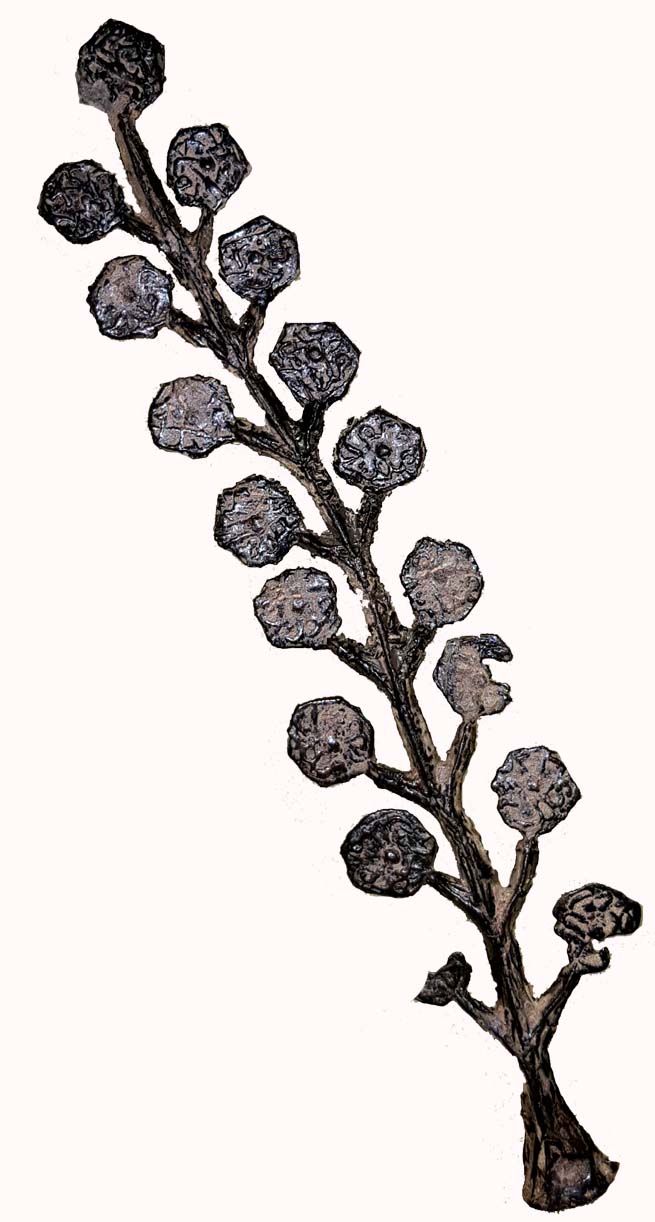
Antique Coin Review 119 : Pohon Katun ( Hexagonal Tin Cash tree) - 16th Century of Johor Sultanate


This is a complete “tree” of coins from Johore Empire Era ( 16th-19th Century).
 Johor is located in the southern tip of Peninsular of Malaysia as well as the most southern point of the Asian Continent. The name of Johor originated from the Arabic word Jawhar which means jewel. It is also known by its Arabic honorific, Darul Takzim ( Abode of Dignity). The Sultanate of Johor was founded by Sultan Alauddin Riayat Shah II , the son of exiled last Sultan of Malacca ( Sultan Mahmud Shah) in 1528 CE. Johor was part of Malaccan Sultanate prior to Malacca occupation by Portuguese in 1511 CE.

This is a rare piece as I haven’t seen such a thing in Malaysian museums yet ( probably I haven’t explored enough).
Let me provide some insights of this “tree”. During the era of Johor Sultanate, tin coins or “Katuns” as they were known, were minted in a variety of shapes and sizes for use in the local markets. Some of these circular, others hexagonal or octagonal. A few of them carried full inscriptions indicating that they were intended for Johor, but the majority were inscribed only with the title such as “ Malik Al Adil” ( The Just King).

This tree was moulded by pouring molten tin though an opening in a mould which runs along a central channel into the side branches and finally into the coin moulds where the katun were cast. After the metal had cooled and hardened, the katuns were broken off and the excess metal of the central stem and brances was re smelted for further use.
Comparing this coins’ tree with my other katuns, I could match this katun with type C katun, hexagonal and class V as outlined in Saran Singh’s The Encyclopaedia of The Coins of Malaysia Singapore & Brunei, page 124 ( SS32A). The obverse has a large central dot surrounded by dots ( total 7 dots) whereas the reverse of this katun is blank.  It has hexagonal shape with plain edge and typical weight of 1.09 gm each. Diameter range from 16-17mm. Some of them look round in shape. Made of tin and RRRR if with the tree.
The other katun tree from the same empire has an S shape as if a kris whereas this one is straight like a tree. Check my other coin tree at
Johor Katun Tree Flower
Johor Katun Tree Kris

This piece is absolutely a priceless relic.

Coin Spec
Description Pohon katun with 15 katuns attached type C, hexagonal with 7 dots, SS32A
Weight : TBA
DIM : TBA
Rarity : RRRR
Ref : Saran's SS32A Pg 124

Sunday, February 4, 2018

Ancient Coin Review 118 : Cockerel Perched on Rings Currency of Sultan Muhammad Jiwa Zainal Abidin Muazzam Shah ( Kedah Sultanate 1710 - 1773 CE)


This is a broken off rings ( 2 rings) from a set of rings of the tin cockerels money. See picture below to understand how the cockerel money looks like.

According to The Encyclopedia of the Coins of Malaysia Singapore & Brunei, the cockerel itself worths 5 cents of the Spanish Dollar with each ring  carries 1 cent in value. The rings were broken off for a small purchase of a few cents.
This type of currency was first regulated during the time of Sultan Muhammad Jiwa Zainal Abidin Muazzam Shah reigning Kedah from 1710CE to 1773 CE. They were still in circulation till mid 19th Century.
Kedah is located in the northwestern part of Peninsular of Malaysia. The name of Kedah originated from the Sanskrit word Kadaram. It is also known by its Arabic honorific, Darul Aman ( Abode of Peace).  The sultanate was the earliest one on the Malay Peninsular as well as one of the oldest Sultanate in the world.


The kingdom began in 630CE as a Hindu Kingdom which the first king was Maharaja Derbar Raja who originally a defeated Persian king of Gemeron ( Bandar Abbas) who fled to Kedah. The people of Kedah found him to be a very smart & tactical man, so they entrusted him to lead them as the king of Kedah.
This kingdom is a Hindu kingdom however I couldnt find in any history book in regards to the faith of Maharaja Derbar Raja. In 630 CE, Gemeron is part of Sassanian Kingdom which Zoroastrian is the main religion.
Towards the end of 11th century, the 9th Kedah Hindu king, Dubar Raja II renounced Hinduism and conerted to Islam. He adpoted an Islamic name, Sultan Muzafar Shah and continued ruling Kedah from 1136 to 1179 CE. This sultanate continues to rule till today.
This mean the present Sultan of Kedah, Sultan Abdul Halim Muzaffar Shah has a direct link back to not just the first Kedah Sultan, Sultan Muzaffar Shah (1136CE) but also to the first Hindu Sultan , Maharaja Derbar Raja ( 630CE). Try to imagine someone with unbroken family lineage since 630CE till now. Unbelievable!!


Weight :TBA gm
Dim : TBA
Rarity : R
Denom : 2 cincin = 2 cents
Material : Tin
Reference : Saran's SS20d , pg 260

Friday, December 15, 2017

Antique Coin Review 117 : Pohon Katun ( Hexagonal Tin Cash tree) - 16th Century of Johor Sultanate


This is a complete “tree” of coins from Johore Empire Era ( 16th-19th Century).

 Johor is located in the southern tip of Peninsular of Malaysia as well as the most southern point of the Asian Continent. The name of Johor originated from the Arabic word Jawhar which means jewel. It is also known by its Arabic honorific, Darul Takzim ( Abode of Dignity). The Sultanate of Johor was founded by Sultan Alauddin Riayat Shah II , the son of exiled last Sultan of Malacca ( Sultan Mahmud Shah) in 1528 CE. Johor was part of Malaccan Sultanate prior to Malacca occupation by Portuguese in 1511 CE.


This is a rare piece as I haven’t seen such a thing in Malaysian museums yet ( probably I haven’t explored enough).
Let me provide some insights of this “tree”. During the era of Johor Sultanate, tin coins or “Katuns” as they were known, were minted in a variety of shapes and sizes for use in the local markets. Some of these circular, others hexagonal or octagonal. A few of them carried full inscriptions indicating that they were intended for Johor, but the majority were inscribed only with the title such as “ Malik Al Adil” ( The Just King).

This tree was moulded by pouring molten tin though an opening in a mould which runs along a central channel into the side branches and finally into the coin moulds where the katun were cast. After the metal had cooled and hardened, the katuns were broken off and the excess metal of the central stem and brances was re smelted for further use.
Comparing this coins’ tree with my other katuns, I could match this katun with type C katun, hexagonal and class V as outlined in Saran Singh’s The Encyclopaedia of The Coins of Malaysia Singapore & Brunei, page 124 ( SS32). The obverse has a large central dot surrounded by circle ( or rather it looks flowery) whereas the reverse of this katun is blank.  It has hexagonal shape with plain edge and typical weight of 1.09 gm each. Diameter range from 16-17mm. Made of tin and RRRR if with the tree.
The other katun tree from the same empire has an S shape as if a kris whereas this one is straight like a tree. Check my other coin tree at
Johor Katun Tree Dots
Johor Katun Tree Kriss

This piece is absolutely a priceless relic.

Coin Spec

Description : Pohon katun with 17 katuns attached type C hexagonal with dot in middle surrounded with flowery shape
Weight : TBA
DIM : TBA
Rarity : RRRR
Ref : Saran's SS32 Pg 124
Weight : 1.43 gm
Dim : 21mm
Rarity : R
Ref : SS30
Ref : Saran's pg 123

Tuesday, August 9, 2016

Antique Coin Review 116 : The first dated Islamic coin from Caliph Uthman Ibn Affan era, 20 reign year of Yazgird III Sassanian / 31 AH ( 652 CE )


This is the first dated coin assigned to the Muslim. This coin was struck during the reign of Caliph Uthman Ibn Affan ( one of prominent companions of Prophet Muhammad pbuh) on Yazdgird III silver drachm. The date on this coin shows regnal year 20 which is the date of Yazgird III death and equivalent to 31AH ( 652 CE). All legends on both sides of this coin were inscribed in Pahlawi except the Arabic verse on the lower right margin on the obverse, بسم الله
Thing to note on this coin, the Muslim kept the Sasanian ruler name and title with the exception of adding the word Bismillah on the margin. The usage of sasanian dirhams continued till the reign of Ummayad. However during the rule of Muawiya. the Sasanian ruler names were removed and replaced with the name of Governors in Pahlawi script.
Yazdegerd III, (died 651, Merv, Sāsānian Empire) the last king of the Sāsānian dynasty (reigned 632–651), the son of Shahryār and a grandson of Khosrow II. During Caliph Umar reign, he invited Yazdgird III into Islam however he refused. When Sasanian Empire fell, Yazdgird III fled to the east and was murdered by a robber in 651CE.


This is info on Uthman Ibn Affan I get from Aisha Stacey article:

Uthman ibn Affan (may Allah be pleased with him) was the third of Prophet Muhammad’s successors.  He was known as the leader of the faithful and ruled for approximately 12 years.  The first six years were times of relative tranquillity and peace, however the last years of his reign were marred by internal conflict, and pockets of rebels trying to cause havoc throughout the Caliphate.
Prophet Muhammad (peace and blessings be upon him) praised his forbearing character and said “After Lot, Uthman is the first man who, with his wife, has given up the comfort of his home for the sake of Allah”.  After some time Uthman and Ruqiayah (may Allah be pleased with them) returned to Mecca to be with the struggling Muslims and their beloved father and Prophet (peace and blessings be upon him).
Uthman (may Allah be pleased with him) knew the Quran by heart and had intimate knowledge of the context and circumstances relating to each verse.  The Quran had been gathered during the time of Abu Bakr and was in the safekeeping of Prophet Muhammad’s wife Hafsah.
Uthman (may Allah be pleased with him) took possession of the originals and ordered some of the most trusted companions to make careful copies.  He then ordered all other unofficial copies to be burned or otherwise destroyed.  Five official copies were sent to the greatest cities of the Muslim Caliphate. Original copies exist to this day in Tashkent, Uzbekistan and the Topkapi Palace in Istanbul, Turkey.
The final six years of Uthman’s reign were marked by rebellion. Some of the governors that had been appointed during the reign of Uthman were heavy handed and to some extent unjust. In this way, the seeds of dissension spread and many of the people began to love the luxuries of life that Uthman had warned against. Conspiracies arose and it was difficult for Uthman to discern friend from foe.  He was reluctant to shed the blood of any Muslim however rebellious they may be.  Uthman (may Allah be pleased with him) preferred to persuade with kindness and generosity for he always remembered the words of Prophet Muhammad (peace and blessings be upon him):  “Once the sword is unsheathed among my followers, it will not be sheathed until the Last Day.”
The rebels called for Uthman to step down and indeed many of the companions advised him to do so.  Uthman (may Allah be pleased with him), now an old man of more than 80 years, heard the words of his beloved prophet ringing in his ears and refused to stand down from his position.  “Perhaps Allah will clothe you with a shirt, Uthman and if the people want you to take it off, do not take it off for them.” 
Uthman (may Allah be pleased with him) remained true to his covenant but after a long siege, the rebels broke into his house and murdered him.  As the assassin’s sword struck, Uthman (may Allah be pleased with him) was reciting the following verse.
“So if they believe in the same as you believe in, then they have been [rightly] guided; but if they turn away, they are only in dissension, and Allah will be sufficient for you against them. And He is the Hearing, the Knowing.”(Quran 2:137)

Check and compare my other Arab-Sasanian coin below :
Caliph Muawiya Abu Sufyan Coin

Coin Specs

Item : Dirham of Caliph Uthman Ibn Affan ( struck on Yazdgird Coin)
Obv :A crowned bust imitating Yazdgird III the Sasanian king
         All legends are written in Pahlavi except the Arabic written بسم الله lower right on margin
         The word on the left is ' pct-afzud= may his splendor increase
         The words on the right is yzdkrt  = Yazdgird
Rev :Fire altar; two attendants holding swords, facing. Star to left, crescent to right. Four crescents 
         containing stars outside triple border. Mint name to right . Date to left. Legends in Pahlavi
          The word on the left is wyst’= 20       
          The word on the right is  SK = Sakastan
Date :  (20 Yazdgird Era), i.e., 31 AH / 652 CE.
Dim : 33 mm
Weight : 4.10gm
Denom : Dirham
Metal : AR
Mint : Sakastan
Rarity : R
Purchased Price : USD

Saturday, August 6, 2016

Ancient Coin Review 115 : Dirham of King Khusro I dated 574CE - Sassanid Empire ( 531-579 CE)


The coin was minted in 574 CE during the time of Khusru I ( known as Khusro Anushiruwan by the Persian). He ruled Persia from 531 – 579 CE.


This coin was struck in 574 CE. Take note that the Muslim Prophet Mohammad pbuh was born in 570 CE.

Obverse
Khusro I bust facing right , wearing a crown/hat with 2 stars on his head. There are 2 pahlavi scripts to the left and right of the king's portrait within the borders.
On the right there is a word, HWSRWD = Khusro (Name of the ruler)
On the left there is a word,  PZWT means “ May his splendour increase”

Reverse

There are 2 attendants flanking a flaming altar with a crescent and a star on their heads. This scene was a symbolic for the Zoroastrianism.
On the right there is a word, FL = Furati Mishan ( a mint city in Southern Iraq)
On the left there is a word ,èḥlèḥl= 44 ( Regnal year)

This is what I found in Wiki about this Emperor :

He was the successor of his father Kavadh I (488–531). Khosrow I was the twenty-second Sasanian Emperor of Persia, and one of its most celebrated emperors.
He laid the foundations of many cities and opulent palaces, and oversaw the repair of trade roads as well as the building of numerous bridges and dams. His reign is furthermore marked by the numerous wars fought against the Sassanid's neighboring arch rivals, the Roman-Byzantine Empire, as part of the already centuries-long lasting Roman-Persian Wars. The most important wars under his reign were the Lazic War which was fought over Colchis (western Georgia-Abkhazia) and the Byzantine–Sasanian War of 572–591. During Khosrow's ambitious reign, art and science flourished in Persia and the Sasanian Empire reached its peak of glory and prosperity. His rule was preceded by his father's and succeeded by Hormizd IV. Khosrow Anushiruwan is one of the most popular emperors in Iranian culture and literature and, outside of Iran, his name became, like that of Caesar in the history of Rome, a designation of the Sasanian kings.[3]
He also introduced a rational system of taxation, based upon a survey of landed possessions, which his father had begun, and tried in every way to increase the welfare and the revenues of his empire. His army was in discipline decidedly superior to the Byzantines, and apparently was well paid. He was also interested in literature and philosophical discussions. Under his reign chess was introduced from India, and the famous book of Kalilah and Dimnah was translated. He thus became renowned as a wise king.


Check my other Sassanian coin below :
Khusro I
Khusro II

Date ......... 574 CE
Ruler........... Khursu I
Condition.............. F
Mint Mark................ FL
Province.............. Furati Mishan
Regnal year.............. 44
Approx. diameter.............  30 mm
Approx. weight in grams............... 3.75 grams

Friday, August 5, 2016

Ancient Coin Review 114 : Sultan Ali Ibn Munawar Shah ( Aceh Sultanate 1586-1589 CE)


This is a gold coin from Sultan Ali Ibn Munawar Shah era. He was the grandson of Sultan Muhamad Shah of Johor. His original name is Raja Buyung. He reigned Aceh from 1586 - 1589 CE.


Looking at the Arabic calligraphy used, its quite tricky as the calligraphy is compressed to fit on the coin face. However it has the resemblance to Thuluth & Sini. Or probably this is how Malay calligraphy was derived.
Obverse : السلطان العادل
                AsSultan Al Adil
Reverse : علي ابن منور شاه
                Ali Ibnu Munawir Shah           

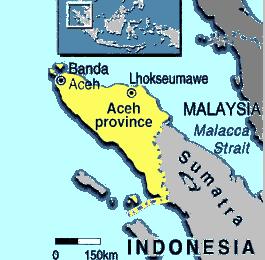
Aceh is a state located at the northern end of Sumatra island ( Indonesia). It is also known by its Arabic honorific Darus Salam ( Abode of Peace) from 1511-1959 CE.
Aceh's origins are unquestionably Cham, as the Champa king Syah Pau Kubah sent his son Syah Pau Ling to rule over Aceh when the capital Vijaya in 1471 AD, was sacked by the Vietnamese Le Dynasty.
The Sultanate of Aceh was founded in 1511 CE after the fall of Pasai Sultanate by Sultan Ali Mughayat Shah. It’s presumed that he is the same person as Syah Pau Ling who converted to Islam.
The Sultanate lasted till 1903 when the last Aceh Sultan Muhammad III Daud Shah Johan Berdaulat surrendered to Dutch occupation.


Obv: As Sultan Al Adil
Rev:  Ali Ibn Munawar Shah
Weight : 0.62 gm
Dim : 13mm
Date : 1586 - 1589 CE
Rarity :
Denom : Mas
Material : Gold
Reference : A 12 (2) pg 169 ( Jaarboek Voor Munt-en Penningkunde)

Ancient Coin Review 113 : Bendahara Sewa Raja Wan Ahmad Quarter Tampang 1295 AH ( Sultanate Pahang)


This is a another rare tampang coin from Bendahara Sewa Raja Wan Ahmad . However in 1882 CE he was proclaimed as the first Sultan of Pahang claiming the title Sultan Wan Ahmad AL Muazzam Shah.He used to be Bendahara from 1863-1881AD.
This coin was struck in 1295 AH ( 1878 CE)
 

Pahang is one of the states in Malaysia. Historically it became part of Malacca Sultanate in 1470 CE till 1641 CE. It was later ruled by Johor Sultanate till 1853 CE then it became independent.
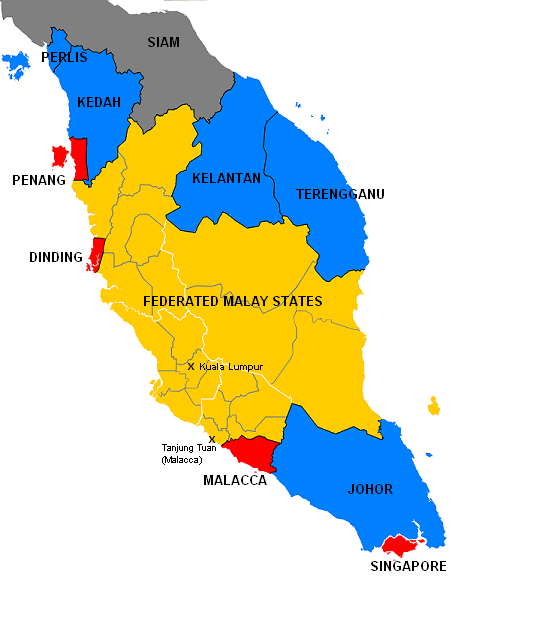
Below is the location of Pahang in relation to other states in Malaysia.
  Similar Tampang can be found in below link Pahang Tampang
Pahang Tampang
Pahang Tampang
Pahang Tampang
Pahang Tampang

Obv : Floral Design
Rev: Malik Al Adil tarikh kepada bulan Rejab sanat 1295
Weight : 13 gm
Dim : 28 x 28 x 8mm
Date : 1295 AH ( 1878 CE)
Rarity : RR
Denom : 1/4 tampang = 1/100 Dollar           
Material : Tin
Reference : SS20  pg 143 ( The Encyclopedia of the Coins)
Purchase Price : RM 

Tuesday, August 2, 2016

Ancient Coin Review 112 : Antique Silver Rupee of Mughal Emperor Akhbar Khan year 1000 AH ( 1592 CE)


This is a silver coin or denominated as Rupee from the time of Emperor Akhbar Khan of Mughal Empire who reigned India from 1556 - 1605 CE. The coin dated 1000 AH ( 1592 CE) i.e on the Emperor 37th regnal year.

In Biography.com, Emperor Akhbar Khan is described below :
Born on October 15, 1542 in Umarkot, India, and enthroned at age 14, Akbar the Great began his military conquests under the tutelage of a regent before claiming imperial power and expanding the Mughal Empire. Known as much for his inclusive leadership style as for his war mongering, Akbar ushered in an era of religious tolerance and appreciation for the arts. Akbar the Great died in 1605.
In 1579, a mazhar, or declaration, was issued that granted Akbar the authority to interpret religious law, superseding the authority of the mullahs. This became known as the “Infallibility Decree,” and it furthered Akbar’s ability to create an interreligious and multicultural state. In 1582 he established a new cult, the Din-i-Ilahi (“divine faith”), which combined elements of many religions, including Islam, Hinduism and Zoroastrianism. The faith centered around Akbar as a prophet or spiritual leader, but it did not procure many converts and died with Akbar.


Historically, Akhbar was the first Mughal emperor who issued coins with Islamic Syahada. However
in the 30th year of his reign, Akbar, who was distanciating himself from Islam and searching for a universal religion, replaced the Hegira era dates by the Ilahi era (the "Divine" era) ones, calculated in solar years from the beginning of his reign. He dropped from the obverse of his coins the Muslim profession of faith and the expression "Allah akbar", "God is great" was substituted. He also suppressed his own name, or maybe not: the arabic expression on the obverse could also mean "Akbar is God"

Obverse : Contains The ruler name, Jalaluddin Muhammad Akbar Badshah Ghazi, date "Alf" ( 1000 AH ) and a mint name Urdu Zafar Qarin.

Reverse :  Syahadah , with 4 caliphs around it.


Weight : 11gm
Diam : 19 x 19mm
Denom : Rupee
Metal : AR
Year : 1000 AH ( 1592 CE)
Mint : Urdu Zafar Qarin
Rarity : Purchased Price : USD
Ref :

Sunday, July 31, 2016

Ancient Coin Review 111 : Johor Sultanate Katun / Cash ( 18th Century)

This is a tin coin from Johore Sultanate era. This type of coin is called cash or katun. It is undated but probably from the 18th Century based on the classification made by Major Fred Pridmore. In Saran Singh's this is classified as Group C- Hexagonal-class IV.


Looking at the Arabic calligraphy used, its quite tricky as the calligraphy is compressed to fit on the coin face. However it has the resemblance to Thuluth & Sini. Or probably this is how Malay calligraphy was derived.
Obverse :  هذا المصروف
                  This is petty money
Reverse : دار الجوهره
                  City of Johor

Johor is located in the southern tip of Peninsular of Malaysia as well as the most southern point of the Asian Continent. The name of Johor originated from the Arabic word Jawhar which means jewel. It is also known by its Arabic honorific, Darul Takzim ( Abode of Dignity). The Sultanate of Johor was founded by Sultan Alauddin Riayat Shah II , the son of exiled last Sultan of Malacca ( Sultan Mahmud Shah) in 1528 CE. Johor was part of Malaccan Sultanate prior to Malacca occupation by Portuguese in 1511 CE.
See my other Katun below :
Round Johor Katun 

Coin Spec


Obverse :  هذا المصروف
                  This is petty money
Reverse : دار الجوهره
                  City of Johor

Weight : 1.43 gm
Dim : 21mm
Rarity : R
Ref : SS30
Ref : Saran's pg 123

Wednesday, July 27, 2016

Ancient Coin Review 110 : Sultanah Inayat Shah Zakiat Ad Din Shah ( Aceh Sultanate 1678-1688 CE)


This is a gold coin from Sultanah Inayat Shah Zakiat Ad Din Shah era. She is the third female to be throned in Aceh Sultanate and daughter of Sultan Muhammad Shah. She reigned Aceh from 1678 - 1688 CE.
In 1683 CE , she had the "honor" of receiving a delegation and gifts from the Sharif of Mecca which originally intended for Great Moghul Aurangzeb who refused the delegation.
Aurangzeb coin can be seen in below link :
Aurangzeb Coin

While I couldn't find any reference as why the Mughal Emperor refused the delegation, I found interesting impact of the delegation visit to Aceh from the book, Islam in Modern Asia written by I.K. Khan.l

Th original intent of this delegation was to visit Moghul Sultan Aurangzeb however he refused to entertain them.( If anyone knows the reason of this refusal please share with us!)
The delegation then stopped in Aceh and was well received by the Sultanah Zakiat Din and the people of Aceh. Letters and gifts were presented to the Sultanah. The delegation was asked to stay few days in Aceh while the Sultanah has ordered the preparation of gifts for them. One of the gifts prepared was a gold statue made from gold from the palace and the Bayt Al Rahman Mosque which were destroyed by fire during the reign of Sultanah Naqittat Din.
These gifts were brought back to Mecca and some of them were distributed to the poor population in the Haramayn.
This visit was a controversial one as the ruler of the Aceh was a woman whereas the Islamic law prohibit a woman to be a ruler. This visit has boosted the prestige of the Sultanah. While the Haramayn ulama were silent in this matter during Sultanah Zakiataddin reign, the people Aceh have also stop disputing the status of a woman ruler.
The silence was broken during the reign of Sultanah Kamalat Ad Din when the Chief Mufti of Mecca has issued a fatwa declaring the Islamic Kingdom cannot be ruled by a woman ruler. As a result, the Sultanah was deposed from the throne and replace with a male Sultan, Badr Alam.


Looking at the Arabic calligraphy used, its quite tricky as the calligraphy is compressed to fit on the coin face. However it has the resemblance to Thuluth & Sini. Or probably this is how Malay calligraphy was derived.

Obverse : فادك سر سلطانه عناية شاه    
                Paduka Sri Sultanah Inayah Shah
Reverse : زكية الدين بردولة شاه
                Zakiat Ad Din Berdaulat Shah


Aceh is a state located at the northern end of Sumatra island ( Indonesia). It is also known by its Arabic honorific Darus Salam ( Abode of Peace) from 1511-1959 CE.
Aceh's origins are unquestionably Cham, as the Champa king Syah Pau Kubah sent his son Syah Pau Ling to rule over Aceh when the capital Vijaya in 1471 AD, was sacked by the Vietnamese Le Dynasty.
The Sultanate of Aceh was founded in 1511 CE after the fall of Pasai Sultanate by Sultan Ali Mughayat Shah. It’s presumed that he is the same person as Syah Pau Ling who converted to Islam.
The Sultanate lasted till 1903 when the last Aceh Sultan Muhammad III Daud Shah Johan Berdaulat surrendered to Dutch occupation.

See my other coin below :
Sultanah Inayat
Sultanah Inayat

Obv:  فادك سر سلطانه عناية شاه    
          Paduka Sri Sultanah Inayah Shah

Rev: زكية الدين بردولة شاه
          Zakiat Ad Din Berdaulat Shah
Weight : 0.59 gm
Dim : 14mm
Date : 1678 - 1688 CE
Rarity :
Denom : Mas
Material : Gold
Reference : A 19a type 4 pg 179 ( Jaarboek Voor Munt-en Penningkunde)

Wednesday, June 29, 2016

Ancient Coin Review 109 : Sultanah Inayat Shah Zakiat Ad Din Shah ( Aceh Sultanate 1678-1688 CE)

This is a gold coin from Sultanah Inayat Shah Zakiat Ad Din Shah era. She is the third female to be throned in Aceh Sultanate and daughter of Sultan Muhammad Shah. She reigned Aceh from 1678 - 1688 CE.
In 1683 CE , she had the "honor" of receiving a delegation and gifts from the Sharif of Mecca which originally intended for Great Moghul Aurangzeb who refused the delegation.
Aurangzeb coin can be seen in below link :
Aurangzeb Coin

While I couldn't find any reference as why the Mughal Emperor refused the delegation, I found interesting impact of the delegation visit to Aceh from the book, Islam in Modern Asia written by I.K. Khan.l

Th original intent of this delegation was to visit Moghul Sultan Aurangzeb however he refused to entertain them.( If anyone knows the reason of this refusal please share with us!)
The delegation then stopped in Aceh and was well received by the Sultanah Zakiat Din and the people of Aceh. Letters and gifts were presented to the Sultanah. The delegation was asked to stay few days in Aceh while the Sultanah has ordered the preparation of gifts for them. One of the gifts prepared was a gold statue made from gold from the palace and the Bayt Al Rahman Mosque which were destroyed by fire during the reign of Sultanah Naqittat Din.
These gifts were brought back to Mecca and some of them were distributed to the poor population in the Haramayn.
This visit was a controversial one as the ruler of the Aceh was a woman whereas the Islamic law prohibit a woman to be a ruler. This visit has boosted the prestige of the Sultanah. While the Haramayn ulama were silent in this matter during Sultanah Zakiataddin reign, the people Aceh have also stop disputing the status of a woman ruler.
The silence was broken during the reign of Sultanah Kamalat Ad Din when the Chief Mufti of Mecca has issued a fatwa declaring the Islamic Kingdom cannot be ruled by a woman ruler. As a result, the Sultanah was deposed from the throne and replace with a male Sultan, Badr Alam.

Looking at the Arabic calligraphy used, its quite tricky as the calligraphy is compressed to fit on the coin face. However it has the resemblance to Thuluth & Sini. Or probably this is how Malay calligraphy was derived.

Obverse : فادك سر سلطانه عناية شاه    
                Paduka Sri Sultanah Inayah Shah
Reverse : زكية الدين بردولة شاه
                Zakiat Ad Din Berdaulat Shah


Aceh is a state located at the northern end of Sumatra island ( Indonesia). It is also known by its Arabic honorific Darus Salam ( Abode of Peace) from 1511-1959 CE.
Aceh's origins are unquestionably Cham, as the Champa king Syah Pau Kubah sent his son Syah Pau Ling to rule over Aceh when the capital Vijaya in 1471 AD, was sacked by the Vietnamese Le Dynasty.
The Sultanate of Aceh was founded in 1511 CE after the fall of Pasai Sultanate by Sultan Ali Mughayat Shah. It’s presumed that he is the same person as Syah Pau Ling who converted to Islam.
The Sultanate lasted till 1903 when the last Aceh Sultan Muhammad III Daud Shah Johan Berdaulat surrendered to Dutch occupation.

See my other coin below :
Sultanah Inayat

Obv:  فادك سر سلطانه عناية شاه    
          Paduka Sri Sultanah Inayah Shah

Rev: زكية الدين بردولة شاه
          Zakiat Ad Din Berdaulat Shah
Weight : 0.60 gm
Dim : 14mm
Date : 1678 - 1688 CE
Rarity :
Denom : Mas
Material : Gold
Reference : A 19a type 4 pg 179 ( Jaarboek Voor Munt-en Penningkunde)