A journey to search my soul

This is a blog of my personal collections. The purpose of this blog is to educate myself and public in regards to antiquities especially related to religion and calligraphy. I welcome everyone to input their feedback in this blog which they think would be helpful. I do not watermark the photos in this blog so everyone is free to use them as long as they are not used for illegal and unethical reasons. I appreciate if you could notify me if you plan to use any of the photos here. Enjoy browsing!!
Showing posts with label Malay. Show all posts

Tuesday, September 22, 2026

Ancient Artifact Review 114 : Antique Sumatra Parang Wafat / Pedang Rajah / Sumatra Talismanic Short Sword (19th Century)


This item is a Parang Wafat (also known as a Parang Rajah or Pedang Rajah), a traditional Sumatran short sword or cleaver-style weapon. This blade belongs to a celebrated class of Indonesian and Malayan ceremonial edge weapons known as Parang Wafat (or Parang Rajah / Pedang Rajah). Unlike standard agricultural or utilitarian parang cleavers, these blades were created as talismanic objects and spiritual shields (rajahan).

The extensive Islamic calligraphy etched and inlaid in gold (koftgari) across the steel surface was believed to imbue the weapon with spiritual protection (barakah or tuah), rendering the bearer safe from physical harm, evil spirits, and defeat in battle.

This Parang Wafat can be dated to the late 19th century to early 20th century (circa 1880–1920).

These blades were heavily produced across the Malay Archipelago—particularly in Sumatra (such as Aceh, Minangkabau, and Palembang) and parts of the Malay Peninsula:

  • Colonial Wars: During the late 19th century, particularly during intense anti-colonial resistance periods like the Aceh War (1873–1904), local fighters and leaders (uleebalang and ulama) commissioned blades inscribed with Quranic verses of victory, divine aid, and steadfastness (such as Surah Al-Imran and Surah Yasin) as morale boosters and protective talismans.

  • Status & Authority: Carrying an extensively inscribed parang was also a mark of high social standing, spiritual authority, and piety within Islamic Malay society.

  • Inscription Style & Technique (Koftgari): The gold leaf/wire inlay application (koftgari) set against dark, acid-etched Damascus steel (pamor) featuring simplified late Naskh/Thuluth calligraphy is characteristic of late 19th-century Sumatran and Malayan arms craftsmanship.

  • Hilt and Scabbard Materials: The deeply carved dark hardwood (Kemuning or Ulu) with polished smooth contours and gold brass/copper collar bands (pedok) reflect standard late 19th and early 20th-century Indonesian/Malay Archipelago metalwork.

  • Blade & Pamor Metallurgy:

    The lower portion of the blade displays patterned Damascus steel forged from layered iron and nickelous meteoritic ore, known as Pamor. In Indonesian weapons traditions, distinct pamor patterns carry specific mystical qualities (e.g., bringing prosperity or warding off misfortune).

  • Calligraphy (Koftgari Inlay): The Arabic verses—including Quran 3:8–9 ("Our Lord, let not our hearts deviate..."), Quran 2:201 ("Our Lord, give us in this world that which is good..."), and the Hawqala—are set into dark, acid-etched iron panels using gold wire inlay (koftgari).

  • Serrated Blade Spine:

    The stepped/serrated crest near the tip is a distinctive feature often seen on Sumatran and South-East Asian talismanic blades, symbolizing stepped mountain peaks (gunungan) or protective saw-tooth wards.

Translation of the Blade Inscriptions on the Obverse

The blade contains prominent Arabic Islamic prayers, Quranic verses, and protective formulas (dua / hawqala):

1. Main Middle Line (Top Row)

اللّهُمَّ إِنِّي أَصْبَحْتُ وَأَمْسَيْتُ وَلَذَا أَهِيبُ...

Translation: "O Allah, indeed I have entered the morning and evening [in Your grace and protection]..."

(This is part of a traditional morning and evening supplication seeking divine protection).

2. Main Lower Line (Second Row)

لَا حَوْلَ وَلَا قُوَّةَ إِلَّا بِاللَّهِ الْعَلِيِّ الْعَظِيمِ

Translation: "There is no power nor strength except in Allah, the Most High, the Most Magnificent."

(The Hawqala / La Hawla).

3. Blade Tip / Edge Section

Contains repeating fragments of the Shahada (declaration of faith):

لَا إِلٰهَ إِلَّا اللّٰهُ مُحَمَّدٌ رَسُولُ اللّٰهِ

Translation: "There is no god but Allah, Muhammad is the Messenger of Allah."


 Translation of the Blade Inscriptions on the Reverse

1. Upper Line (Quran 3:8–9)

رَبَّنَا لَا تُزِغْ قُلُوبَنَا بَعْدَ إِذْ هَدَيْتَنَا وَهَبْ لَنَا مِنْ لَدُنْكَ رَحْمَةً إِنَّكَ أَنْتَ الْوَهَّابُ ۝ رَبَّنَا إِنَّكَ جَامِعُ النَّاسِ لِيَوْمٍ لَا رَيْبَ فِيهِ...

Translation: "Our Lord, let not our hearts deviate after You have guided us and grant us from Yourself mercy. Indeed, You are the Bestower. Our Lord, surely You will gather the people for a Day about which there is no doubt..."

2. Middle / Lower Line (Quran 2:201 & Quran 36:58)

رَبَّنَا آتِنَا فِي الدُّنْيَا حَسَنَةً وَفِي الْآخِرَةِ حَسَنَةً وَقِنَا عَذَابَ النَّارِ ... سَلَامٌ قَوْلًا مِنْ رَبٍّ رَحِيمٍ

Translation: "Our Lord, give us in this world [that which is] good and in the Hereafter [that which is] good and protect us from the punishment of the Fire ... 'Peace,' a word from a Merciful Lord."

3. Blade Tip / Serrated Edge Section

Contains repeating expressions of faith and divine invocations (Tahlil and Hawqala):

لَا إِلٰهَ إِلَّا اللّٰهُ ... لَا حَوْلَ وَلَا قُوَّةَ إِلَّا بِاللَّهِ الْعَلِيِّ الْعَظِيمِ

Translation: "There is no god but Allah ... There is no power nor strength except in Allah, the Most High, the Most Magnificent."

Sunday, September 20, 2026

Ancient Manuscript Review 209 : Antique Malay Manuscript ( 1288 AH / 1872 CE )


This is a small manuscript on various Islamic topics written in an old Malay language. Acquired from Amcorp Mall in Malaysia in 2025. Undated but there is a note written on the page mentioning about the death of someone name Tuan Fakir who passed away on Wednesday Zohor time 23 Rabiul Awal 1288 AH. Its peculiar that the year date is written a combination of Arabic and Roman Numeral  ١٢88

Manuscript Specs


Item : Antique Malay Manuscript

Content : Islamic prayer, Fiqh,  & selected Quranic verses

Dim :  12mm  x  10mm

Date : 18-19th century

Copyist : anonymous

Origin : Malaysia

Calligraphy : Malay

Design : Written in Malay scripts in red & black in Arabic & Malay language

Purchased Price :US


Saturday, September 19, 2026

Ancient Artifact Review 113 : Antique Malay Jawi Plate (1883 CE)


This is a priceless antique plate decorated with Malay / Jawi texts. This plate was manufactured by Petrus Regout company sometime between 1819 CE to 1864 CE. This company was established in 1836 CE in Holland and the name was changed to Sphinx in 1899 CE . However the Sphinx was adopted as trademark between 1878-1883 CE. The trademark can be seen at the bottom of this plate, written Petrus Regout & Co Maastricht inside a box with Made in Holland under it while the picture of sphinx on the box. In the book, Piring Puisi Melayu, the Regout trademark recorded is with an elephant picture instead of a sphinx.

"The plate was printed using the process of transfer-printing. The design is engraved on a metal plate, then impressed on a thin piece of paper, and transferred to the surface of the pottery or porcelain."

There are 8 lines converging to the centre inscribed with 4 names of the first Muslim Rightly-Guided Caliphs and 4 names of the angels. The caliphs and angels name are written alternately :

Abu Bakar

Jibrail

Ali

Israfil

Osman

Izrail

Omar

Mikail

At the centre of the plate there in an inscription of Muhammad Nabi Al Rahman

This plate inscribed with these important names could be assumed served as decoration as well as reminder of these nobel figures. It could also served as an amulet ward of evil spirit or to invoke blessings to some superstitious house dwellers.

There is an interesting research & article written by Henri Chambert-Loir from Almanac Indonesia & The Malay World in regards to the poetic jawi plate. It was quite extensive research and dug further to its origin and its design. This plate was described on page 198 however without a picture. While in Piring Puisi Melayu book, the picture is included on page 37 with reference H2 without further description. According to the author, the scribe is not Khatib Muharis like in other jawi plates.  Diameter of this plate is TBAcm

See below my other Malay Plate

Pinggan Pantun 01

Pinggan Pantun 02

Pinggan Pantun 03

Pinggan Pantun 04

Reference :

1) Eating the text : English plates decorated with Malay poems, by Henri Chambert-Loir ( published in Indonesia & The Malay World 1994)

2) Piring Puisi Melayu ( Abu Muawiyah) 2023  ( Plate reference : PPM-H2 )

3) Crescent Moon : Islamic Art & Civilisation South East Asia, pg 78


Tuesday, December 10, 2024

Ancient Artifact Review 112 : Antique Malay Pending / Belt Buckle 19th Century


The pending is a belt buckle worn by both men and women, often in an ogival shape and decorated with floral and vegetal motifs. This pending is made of silver repousse and believed worn by men due to its large size. Some pendings that are made of gold, adorned with repoussé work and valuable gemstones, were worn by nobility. Various metalworking techniques, such as repoussé, chasing, niello, wire filigree, and faceted granulation, were used to create different aesthetic effects

Pending that is shaped like an eye. This shape is likely a symbol. In the middle there is a circle that becomes the center or pending eyeball, some are studded with jewels. Pending has smooth or notched edges, decorated with clouds or abstract decorations or plant shapes such as ghost spinach, creeping flowers or scaly animals. Everything is arranged in the area between the lines according to the pending form. In the middle, surrounded by a circle arranged with plant motifs. This decoration is produced by tapping and then carved in a traditional way.

The pending design shares similarities with those made by Chinese craftsmen for the Chinese communities in Malacca, Penang, and Singapore. In the Iban community in Sarawak, the pending serves a different purpose, being used by women to cover their chest.


Artifact Specs :

Item : Silver Repousse Pending ( Belt Buckle)

Dim : 27 cm x 15 cm

Weight : TBA

Date : 19th Century CE

Purchased Price :

Reference :  pg 47, Islamic Civilization in the Malay World


Tuesday, May 21, 2019

Ancient Manuscript Review 205 : Antique Malay jawi Handwritten Manuscript ( 18th Century)


This is a large manuscript without cover written in Malay language in Jawi. Acquired from Sarawak Borneo.

Manuscript Specs

Item : Antique Malay Islamic Jurisprudence
Manuscript Content : Islamic Jurisprudence
DIM : 35cm x 20cm
Date : 18th Century CE
Copyist : anonymous
Origin : South East Asia
Calligraphy : Malay -Naskh
Design : Written in Malay-Naskh scripts in black and red
Purchased Price : USD

Sunday, February 4, 2018

Ancient Coin Review 118 : Cockerel Perched on Rings Currency of Sultan Muhammad Jiwa Zainal Abidin Muazzam Shah ( Kedah Sultanate 1710 - 1773 CE)


This is a broken off rings ( 2 rings) from a set of rings of the tin cockerels money. See picture below to understand how the cockerel money looks like.

According to The Encyclopedia of the Coins of Malaysia Singapore & Brunei, the cockerel itself worths 5 cents of the Spanish Dollar with each ring  carries 1 cent in value. The rings were broken off for a small purchase of a few cents.
This type of currency was first regulated during the time of Sultan Muhammad Jiwa Zainal Abidin Muazzam Shah reigning Kedah from 1710CE to 1773 CE. They were still in circulation till mid 19th Century.
Kedah is located in the northwestern part of Peninsular of Malaysia. The name of Kedah originated from the Sanskrit word Kadaram. It is also known by its Arabic honorific, Darul Aman ( Abode of Peace).  The sultanate was the earliest one on the Malay Peninsular as well as one of the oldest Sultanate in the world.


The kingdom began in 630CE as a Hindu Kingdom which the first king was Maharaja Derbar Raja who originally a defeated Persian king of Gemeron ( Bandar Abbas) who fled to Kedah. The people of Kedah found him to be a very smart & tactical man, so they entrusted him to lead them as the king of Kedah.
This kingdom is a Hindu kingdom however I couldnt find in any history book in regards to the faith of Maharaja Derbar Raja. In 630 CE, Gemeron is part of Sassanian Kingdom which Zoroastrian is the main religion.
Towards the end of 11th century, the 9th Kedah Hindu king, Dubar Raja II renounced Hinduism and conerted to Islam. He adpoted an Islamic name, Sultan Muzafar Shah and continued ruling Kedah from 1136 to 1179 CE. This sultanate continues to rule till today.
This mean the present Sultan of Kedah, Sultan Abdul Halim Muzaffar Shah has a direct link back to not just the first Kedah Sultan, Sultan Muzaffar Shah (1136CE) but also to the first Hindu Sultan , Maharaja Derbar Raja ( 630CE). Try to imagine someone with unbroken family lineage since 630CE till now. Unbelievable!!


Weight :TBA gm
Dim : TBA
Rarity : R
Denom : 2 cincin = 2 cents
Material : Tin
Reference : Saran's SS20d , pg 260

Friday, December 15, 2017

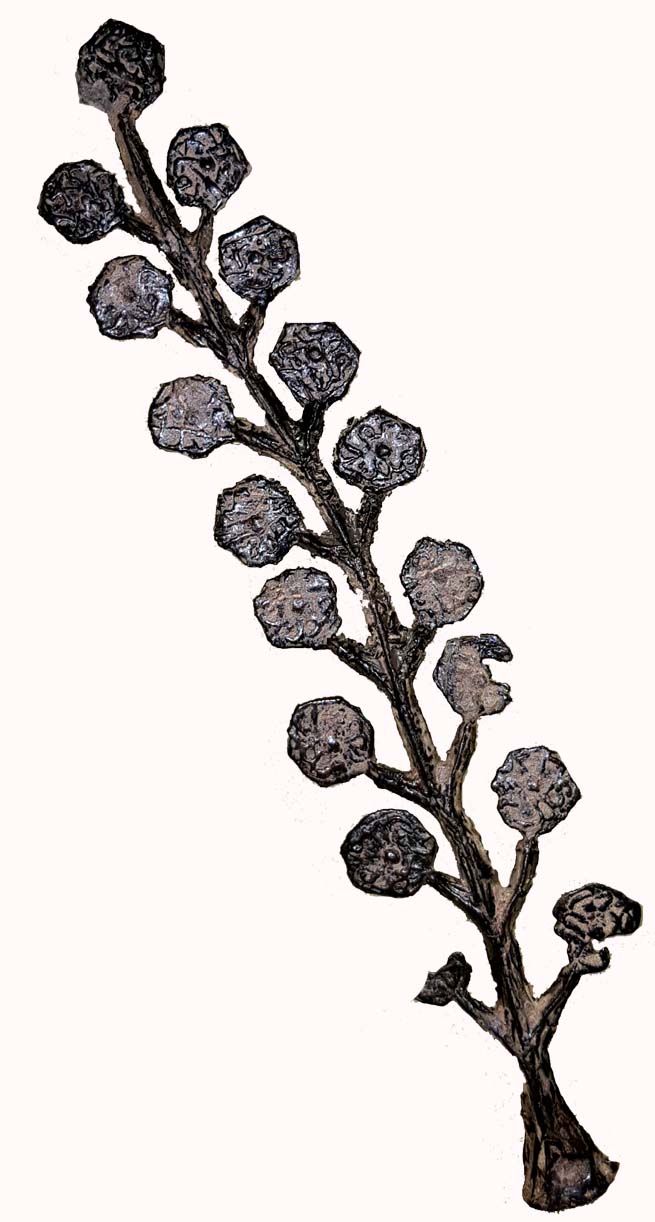
Antique Coin Review 117 : Pohon Katun ( Hexagonal Tin Cash tree) - 16th Century of Johor Sultanate


This is a complete “tree” of coins from Johore Empire Era ( 16th-19th Century).

 Johor is located in the southern tip of Peninsular of Malaysia as well as the most southern point of the Asian Continent. The name of Johor originated from the Arabic word Jawhar which means jewel. It is also known by its Arabic honorific, Darul Takzim ( Abode of Dignity). The Sultanate of Johor was founded by Sultan Alauddin Riayat Shah II , the son of exiled last Sultan of Malacca ( Sultan Mahmud Shah) in 1528 CE. Johor was part of Malaccan Sultanate prior to Malacca occupation by Portuguese in 1511 CE.


This is a rare piece as I haven’t seen such a thing in Malaysian museums yet ( probably I haven’t explored enough).
Let me provide some insights of this “tree”. During the era of Johor Sultanate, tin coins or “Katuns” as they were known, were minted in a variety of shapes and sizes for use in the local markets. Some of these circular, others hexagonal or octagonal. A few of them carried full inscriptions indicating that they were intended for Johor, but the majority were inscribed only with the title such as “ Malik Al Adil” ( The Just King).

This tree was moulded by pouring molten tin though an opening in a mould which runs along a central channel into the side branches and finally into the coin moulds where the katun were cast. After the metal had cooled and hardened, the katuns were broken off and the excess metal of the central stem and brances was re smelted for further use.
Comparing this coins’ tree with my other katuns, I could match this katun with type C katun, hexagonal and class V as outlined in Saran Singh’s The Encyclopaedia of The Coins of Malaysia Singapore & Brunei, page 124 ( SS32). The obverse has a large central dot surrounded by circle ( or rather it looks flowery) whereas the reverse of this katun is blank.  It has hexagonal shape with plain edge and typical weight of 1.09 gm each. Diameter range from 16-17mm. Made of tin and RRRR if with the tree.
The other katun tree from the same empire has an S shape as if a kris whereas this one is straight like a tree. Check my other coin tree at
Johor Katun Tree Dots
Johor Katun Tree Kriss

This piece is absolutely a priceless relic.

Coin Spec

Description : Pohon katun with 17 katuns attached type C hexagonal with dot in middle surrounded with flowery shape
Weight : TBA
DIM : TBA
Rarity : RRRR
Ref : Saran's SS32 Pg 124
Weight : 1.43 gm
Dim : 21mm
Rarity : R
Ref : SS30
Ref : Saran's pg 123

Saturday, August 6, 2016

Ancient Artifact Review 99 : Antique Malay Poems Jawi Plate / Pinggan Pantun (1819-1864 CE)


This is a priceless antique English plate decorated with Malay / Jawi motif & pantun (poems). This plate was manufactured by Williams Adams & Sons company sometime between 1819 CE to 1864 CE. This company was established in the early nineteenth century and great supplier of wares to India & the Far East. The trademark can be seen at the bottom of this plate, written W. Adams And Son under a medallion inside which is inscribed the name of the motif viz MALAY.
"The plate was printed using the process of transfer-printing, which was first used in England around 1750. The design is engraved on a metal plate, then impressed on a thin piece of paper, and transferred to the surface of the pottery or porcelain."

The pantun inscribed on the rims written :
" Yang membuat namanya Adam,
wakilnya Tolson di Betawi,
Syair dan pantun banyaklah ragam,
Janganlah tuan kikir membeli"


Anderson Tolson is probably a retailing firm in Batavia.
The pantun inscribed 4 lines in the centre written :


Pinggan ramping dadanya bidang
Susunya seperti telur kepudang
Sangatlah suka patik memandang
Seperti puteri di gunung Ledang

There is an interesting research & article written by Henri Chambert-Loir from Almanac Indonesia & The Malay World in regards to the this type of plate. It was quite extensive research and dug further to its origin and its design. The handwriting print on this plate belongs to Khatib Muharis. Even though his name is not printed on this plate, there are others with the same handwriting bearing his name. Diameter of this plate is 27cm

See below link to see what else Dr Henri said about this plate writing tradition :
Dr Henri talk on pinggan pantun

Similar plate was seen in Muzium Warisan Melayu UPM, check below link about this plate :
Pinggan Pantun in Muzium Warisan Melayu

See below my other Malay Plate
Pinggan Pantun

Reference :
Eating the text : English plates decorated with Malay poems, by Henri Chambert-Loir ( published in Indonesia & The Malay World 1994)

Crescent Moon : Islamic Art & Civilisation South East Asia, pg 78

Friday, August 5, 2016

Ancient Coin Review 113 : Bendahara Sewa Raja Wan Ahmad Quarter Tampang 1295 AH ( Sultanate Pahang)


This is a another rare tampang coin from Bendahara Sewa Raja Wan Ahmad . However in 1882 CE he was proclaimed as the first Sultan of Pahang claiming the title Sultan Wan Ahmad AL Muazzam Shah.He used to be Bendahara from 1863-1881AD.
This coin was struck in 1295 AH ( 1878 CE)
 

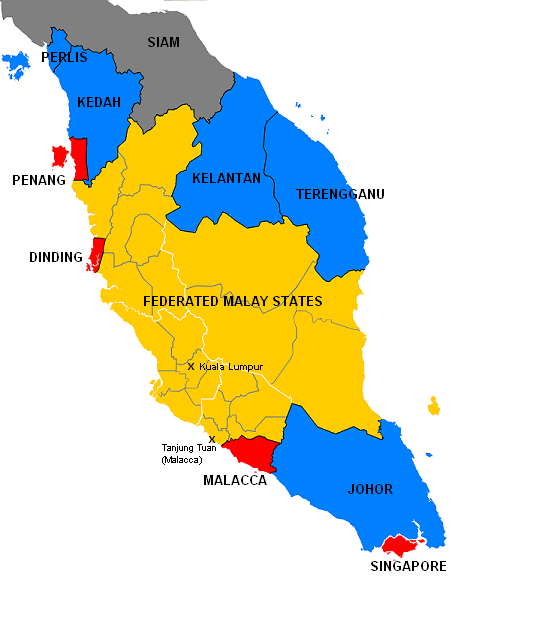
Pahang is one of the states in Malaysia. Historically it became part of Malacca Sultanate in 1470 CE till 1641 CE. It was later ruled by Johor Sultanate till 1853 CE then it became independent.
Below is the location of Pahang in relation to other states in Malaysia.
  Similar Tampang can be found in below link Pahang Tampang
Pahang Tampang
Pahang Tampang
Pahang Tampang
Pahang Tampang

Obv : Floral Design
Rev: Malik Al Adil tarikh kepada bulan Rejab sanat 1295
Weight : 13 gm
Dim : 28 x 28 x 8mm
Date : 1295 AH ( 1878 CE)
Rarity : RR
Denom : 1/4 tampang = 1/100 Dollar           
Material : Tin
Reference : SS20  pg 143 ( The Encyclopedia of the Coins)
Purchase Price : RM 

Tuesday, August 2, 2016

Ancient Artifact Review 95 : Antique Malay Ceremonial / Calligraphic Batik / Kain Arab / Ikat Kepala / Kerudung / Shroud / Batek Bersurek / Batik Bersurat ( late 19th - early 20th Century)


This is a very rare "Batik Bertulis" / " Kain Arab" or Calligraphic Batik. It is a long rectangular batik cloth made of cotton dyed in light brown with Arabic inscriptions.
The batik making requires several stages of waxing and dyeing in order to produce beautiful colors and designs. Though the art of dyeing first appeared in ancient  Middle East & Far East , the batik making is very specific to Java Island after the dyeing skill has been transferred to Southeast Asia.

According to Mohd Taib Osman in his book Islamic Civilization in the Malay World, after the establishment of Islamic rule in Cerebon (West Java) from 16th Century onward, the testimony of faith has been expressed into batik making. Batik in the form of long shawl, head cloth and ceremonial hangings were decorated with Quranic inscriptions.

For this particular sample, the calligraphy is almost illegible most likely painted by illiterate makers or served as talismanic purposes.The type of khat used most likely Thuluth.
I have tried my best to decipher some of the calligraphy and I welcome any comments.


This inscription is located at the middle of the cloth. It is very difficult to make out the phrase however I think it is the proclamation of Islamic Syahadah.
  
اشهد ان لا إله إلا الله واشهد ان محمد الرسول الله
 "I bear witness that there is no deity worthy to be worshipped but Allah, and I bear witness the Muhammad is His servant and messenger.''

As for the shape of this calligraphy is formed, I believe this is a shape of a coffin. It could mean that this cloth is used to cover a coffin especially of a noble and an important person.


Another calligraphy form which is located at both end of the cloth clustering around like a flower is also indecipherable.I have extracted the form as above. However I think it is صلى الله على محمد which means Praise of Allah onto Muhammad.


Another calligraphy form as above is of a Tughra of Ottoman Sultan like in most other Batek Bersurat. Michael Rogers, a curator for Khalili Collection identified the tughras as the signs of the Ottoman Sultan, Abdul Hamid II ( 1876-1918).


As for the human form calligraphy in a prayer sitting position, I could match it with another well known calligraphy as a comparison. This calligraphy is also  Islam faith testimony.

اشهد ان لا إله إلا الله واشهد ان محمد الرسول الله
 "I bear witness that there is no deity worthy to be worshipped but Allah, and I bear witness the Muhammad is His servant and messenger.''

As for the background calligraphy, comparing to some other cloths which I have seen in the catalog. The inscriptions are most probably :

الله يرزقها وهوا السمع العليم ما يفتح الله للنا من رحمة فلا مما لها وما يمسك فلا بعده وهو العزيز الحكيم

So the scribbles could be imitating this inscriptions.
Although these scribbles almost impossible to decipher, either the makers are illiterate or the purchasers unable to read Arabic, this was irrelevant. The message conveyed by this cloth is crystal clear that the owner is a Muslim and he/she purchased this cloth either for a talismanic purpose or  Islamic related ceremony.

This piece was used predominantly as a shawl or as a shroud . It can also serve as men's head cloth or "ikat kepala". Another usage might be as ceremonial hanging or wrapper for a Quran. It was found in Indonesia and most likely was produced there. The Quranic verses and prayers on the cloth are believed to have properties that would protect the wearer from sickness or injury

In a similar Calligraphic batik depicted in The Message & The Monsoon Catalog, page 115, dated 19-20 Century, this rectangular and long cloth is also know as Kerudung in Java. It means a shroud which was worn around the head, shoulder or body. It could be also used as a temporary cover for coffin or tomb as well as ceremonial hanging and banner.

In the book of Crescent Moon : Islamic Art & Civilization in Southeast Asia, the history of the production of this cloth is discussed in lengthy by Robyn Maxwell. Though the production of  textile with Islamic calligraphy started prior to 19th century, the calligraphy design on batik produced in Java between late 19th to early 20th century was at peak due to the accessibility of commercially woven cotton cloth.

Ceremonial or Calligraphic batik is very rare to find. In an auction at Christie's, 3 similar batiks were sold at USD3358 under sale number 5682 dating them from late 19th century to early 20th century. Below is the link

Batik at auction

There is also similar cloth displayed in Islamic Arts Museum Malaysia which dated to late 19th Century-early 20th Century.


See my other similar cloth on :
Blue Calligraphy Batek
Red Calligraphy Batek

Dim : 238mm x 90mm
Date : 19th- 20th Century
Material :hand drawn batik
Origin :  Malay Archipelago
Price : RM pr

Sunday, July 31, 2016

Ancient Artifact Review 89 : Antique Malay Muslim Kukor Kelapa ( Coconut Grater) 19th Century


 This is a very interesting coconut grater called kukor kelapa from Malaysia. It was used predominantly by the Muslim Malays in Malaysia to grate coconut flesh. The body of this Kukor was made of wood and beautifully carved in floral motives. Motifs of foliage and floral were used as Islam prohibits using animal motifs.
This kukor is probably from 19th Century.

Compare this kukor with a simple foldable kukor below :
Foldable Kukor

Specification :

Item : A Coconut Grater ( Kukor Kelapa)
Dim : 500mm x 150mm
Material : Wood
Design : Floral Motives
Origin : Malaysia

Wednesday, July 27, 2016

Ancient Artifact Review 85 : Antique Qing Dynasty Blue & White Plate with Arabic Motifs ( 17-18th Century)


This is a museum piece of a small plate from Qing Dynasty. Blue and white plate produced in China and exported to South East Asia.
The plate is decorated with floral and foliage in blue surrounded by squiggles that strongly resemble Arabic writing. In the centre is a full round chrysanthemum with 3 half ones around the it. Whereas 3 full chrysanthemum alternating in between Arabic-calligraphy-looking squiggles on the outer rim. This motif is believed intentionally designed for export to Malacca and other Malay Islamic kingdoms in south east asia in 17th-18th Century.
The plate is 100mm diameter.


Check below my other plate
Swatow Plate

 In Wikipedia. Blue and White Porcelain is described :

"Blue and white wares" (Chinese: 青花; pinyin: qīng-huā; literally: "Blue flowers") designate white pottery and porcelain decorated under the glaze with a blue pigment, generally cobalt oxide. The decoration is commonly applied by hand, by stencilling or by transfer-printing, though other methods of application have also been used.

Antique Artifact Review 84 : Antique Malay Betel Nut Cutter / Kacip ( 19th Century)


In the past, chewing Areca palm nut wrapped in betel leaf  was widespread in South East Asia.
Nowadays this habit is gradually forgotten by especially younger generation.
However to Malays, Betel took on a ritual meaning to a traditional marriage. The item listed here is called "kacip" or a betel nut cutter. Made of bronze and has a shape of a Turkey. Estimated from 19th Century. Origin from Malaysia.
See below the housing of the betel nut , Tepak Sireh
Malay Tepak Sireh

Dim : 120mm x 50cm
Date : 19th Century CE
Material : Bronze
Origin :Malaysia

Tuesday, July 26, 2016

Ancient Artifact Review 83 : Antique Borneo Brunei Sarawak Brass Kettle ( 17-18th century)

The brass kettle is among the most popular medium of exchange in the hinterland of Sarawak, Malaysia. The kettle is considered as standards for value and stores of wealth and akin to money in most longhouses. It was also used as marriage gifts and land or property trade.
This kettle is made of brass and decorated with animal shapes. There is a dragon shape across the body of the kettle indicating the influence of chinese culture or trading activity in the region.
This is a very rare kettle because of it size. Normally typical decorated kettle is about 25-30cm in height. However this kettle is the giant one standing at 45 cm with weight around 11kg!!
I purchased this kettle from my good old friend in KL this year for a very reasonable price. Thanks ST.
A similar kettle but of smaller size can be seen Malaysia National Museum Catalog page 5. as well as in Malaysian Numismatic Heritage page 26.
I have seen a similar kettle in EBAY selling for USD3000 !!
See my other kettle from Borneo with Arabic numerals :

Brunei Islamic Brass Kettle

Weight : TBA gm
Dim : 45cm x 44cm x 32 cm
Rarity :  RRR
Material : Brass
Weight : 11kg
Reference : The Currency Legacy : A Guide to Bank Negara Malaysia's Collection

Sunday, July 24, 2016

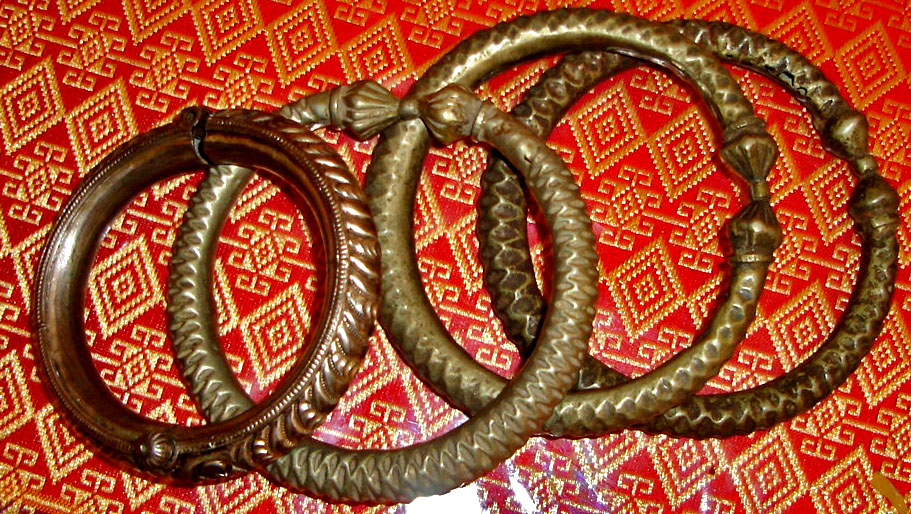
Ancient Artifact Review 82 : Antique Copper Anklets of Malay / Peranakan of Malaysia ( 19th Century)

These are a few antique anklets of various sizes made of copper. They were worn by Malay / Peranakan girls/ladies in Malaysia prior to 20th Century.

Specification :

Item :  Antique copper anklets
Dim : TBA
Material : Brass
Design :
Origin : Malaysia

Saturday, July 23, 2016

Ancient Artifact Review 81 : Antique Papan Gendeng of Malay Traditional House Kuala Kangsar ( 19th Century)


This is a piece of carved wood called Papan Gendeng used as part of a Malaysian traditional house. It was placed normally above a window or a door. Apart from beautifying the house, it also serves as a ventilation.
This Gendeng is beautifully carved in foliage motif and from 19th Century.

It has a dimension  of 600 x 200 mm.

Check below links of Malay products which use foliage motif
 Malay Door
Malay Kukor


Specification :

Item : A wooden Gendeng
Dim : 600 x 200 mm.
Material : Wood
Design : Foliage motif
Origin : Kuala Kangsar